Skip to content


Table of Contents
Georgia sun exposure speeds up visible skin aging by breaking down collagen and elastin faster than time alone ever would. At First Body & Wellness Center, we explain what the sun in this part of the country does to skin, how to recognize it, and what can honestly be done about it.
Can sun damage on the skin be improved?
In many cases, yes, though the right approach depends on the type of damage. Pigment and sun spots respond to skin treatment, while crepey texture & mild laxity respond better to radiofrequency microneedling, which remodels collagen deeper in the skin. Results build gradually & vary from person to person.
Sun Aging And Chronological Aging Are Not The Same Thing
Two separate processes age your skin, and only one of them is on a clock. Chronological aging, sometimes called intrinsic aging, is driven by genetics and time. It shows up evenly across the body, with gradual skin thinning and a slow loss of firmness everywhere.
Photoaging is the other process, and it comes from the outside. It affects only skin that gets light, and it produces signs that ordinary aging usually does not, like distinct brown spots and blotchy, uneven tone. Research has consistently attributed the large majority of visible facial aging to UV exposure rather than to age itself.
You can see the difference on your own body in about five seconds. Look at the skin on the inside of your upper arm, an area that rarely sees sun. Now look at the back of your hand or your outer forearm. Same person, same number of birthdays, very different skin. That gap is premature skin aging from sun exposure.
What Georgia’s Climate Actually Does To Skin
Georgia gives skin very little time off. Atlanta sits near the 33rd parallel and averages roughly 2,740 hours of sunshine a year, in a humid subtropical climate with no real dry season & no genuinely dark stretch of winter. Peak summer UV index runs around 7, which most people respect. The part that quietly does the damage is that winter UV never drops to zero.
Mild winters also keep us outside. A morning on the Big Creek Greenway in February, a Saturday of youth soccer, a round of golf, dinner on a patio at Avalon in October. None of that feels like sun exposure the way a beach day does.
The exposure most people underestimate is not recreational at all. It is incidental: the GA 400 commute with sun coming through the driver’s-side window, twenty minutes in the school pickup line, walking across a parking lot at midday—small doses, five days a week, for decades. Georgia sun damage rarely comes from one bad burn. It is the accumulation.
How UV Breaks Down Collagen And Elastin
UVA rays reach the dermis, the deeper layer where your collagen and elastin actually live. They also pass through clouds & window glass, which is why a gray day or a long drive still counts.
Once UV reaches that layer, two things happen at once. Exposure generates oxidative stress, which activates enzymes that break down the collagen you already have. It also slows your skin’s ability to produce new collagen to replace it. That combination is what makes collagen loss from sun exposure compound over the years instead of leveling off. Elastin damage follows a similar path, and elastin is the protein responsible for skin snapping back into place.
UVB works closer to the surface. It drives sunburn, surface DNA damage, and much of the pigment response.
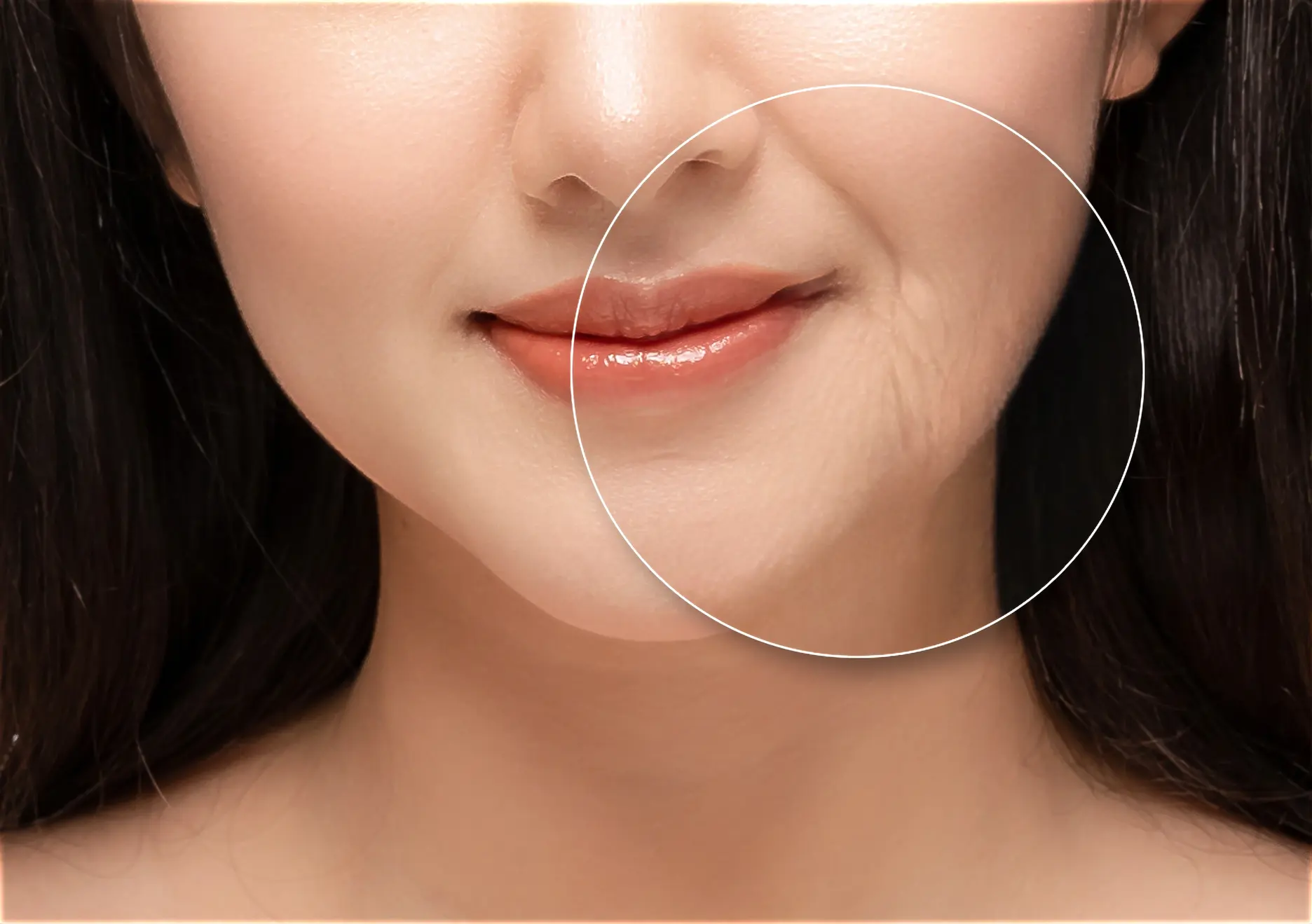
Over twenty or thirty years, the net result is a thinner, weaker foundation beneath the skin. On the surface, that shows up as fine lines, a loss of firmness, and a thin, finely wrinkled texture that sends many people looking for crepey skin treatments.
Why Sun Damage Shows Up As Spots, Not Just Wrinkles
Pigment is the other half of photoaging, and for many patients it is the half they notice first. Repeated UV exposure pushes melanocytes, your pigment-producing cells, into overproduction. Over time, that surfaces as sun spots, scattered freckling, & tone that no longer looks even across the face.
Sun exposure also makes existing pigment conditions harder to manage:
- Melasma, which is hormonally influenced, tends to darken and rebound with UV exposure
- Post-inflammatory hyperpigmentation, the dark marks left behind after a breakout, lingers longer when the skin keeps getting sun.
Your Fitzpatrick skin type influences how all of this presents. In medium to deeper skin tones, pigment changes are often the earliest and most visible sign of sun damage, showing up well before any laxity does. Redness and small visible capillaries across the nose and cheeks belong in this picture too, particularly for anyone managing rosacea.
What Can Be Improved And What Cannot
Prevention is still the highest-return thing you can do, and it is never too late to start. Daily broad-spectrum SPF, reapplying it, shade during peak midday hours, and UV-protective clothing all reduce further damage. Topical antioxidants and retinoids support barrier repair and cell turnover, though they work over months rather than weeks.
For damage already there, the honest answer is that it depends on which kind you have. Pigment and texture respond to different approaches, which is why we separate them:
- For discoloration and sun spots, IPL photofacial, chemical peels, and CO2 resurfacing target pigment directly
- For crepey texture and mild laxity, radiofrequency (RF) microneedling with Morpheus8® works deeper, remodeling collagen to firm and smooth the skin from underneath.
Expectations matter here. Existing damage can often be improved, results build gradually as new collagen forms, and outcomes vary by skin type, history, and how much protection you use afterward.
A Visia® skin analysis is a useful starting point because it shows subsurface UV damage that hasn’t yet become visible, and it tells us where skin rejuvenation treatments should begin. If you are considering skin aging treatments in Alpharetta, GA, our provider’s assessment at First Body & Wellness Center is usually step one.
Refresh Your Skin
You don’t have to accept Georgia sun damage and skin aging. At First Body & Wellness Center, our team looks at what your skin actually needs and builds a plan around it. Reverse the Visible Effects of Sun Damage Today! Schedule a consultation, and let’s start with an honest look at your skin.