Skip to content

Table of Contents
If you have been quietly dealing with bladder leaks, sudden urges, or a pelvic floor that just does not feel as strong as it used to, you are not alone. Two of the most talked-about options are pelvic floor exercises you do at home and the Emsella chair you sit on in a clinic. So when it comes to Kegels vs Emsella, First Body & Wellness Center guides you on which one actually works better.
Is Emsella more effective than Kegels for strengthening the Pelvic Floor?
Emsella® is more effective than Kegels for many people because it triggers thousands of correct, deep contractions automatically, with no guesswork about technique. Kegels still work well for those who isolate the muscles correctly and stay consistent. For faster, more reliable results, Emsella® usually has the edge, though combining both often works best.
How Kegels and Emsella® Each Strengthen the Pelvic Floor
Both methods chase the same goal, a stronger pelvic floor and better bladder control, but they get there in very different ways.
Kegels are voluntary contractions you perform on your own. You tighten and release the muscles that control the flow of urine, ideally several times a day. There is no equipment and no appointment, just you and a bit of daily effort.
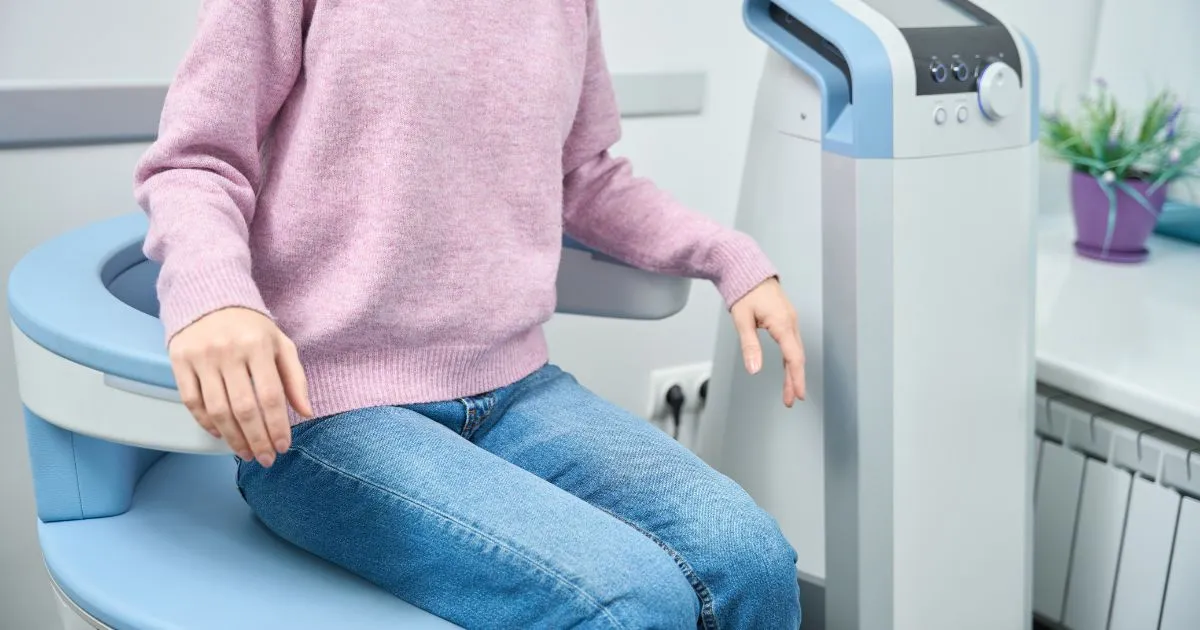
Emsella® works differently. It uses HIFEM, which stands for high-intensity focused electromagnetic energy, to trigger involuntary contractions in the pelvic floor while you sit fully clothed on the treatment chair.
These are supramaximal contractions, meaning they go beyond what you could ever create on your own. A single Emsella treatment session delivers the equivalent of thousands of Kegels, far more repetitions than most people could manage manually in a week.
Why Kegels Work for Some People and Fall Short for Others
Kegels are genuinely effective, but there is an honest catch. When done correctly and consistently, pelvic floor exercises can improve bladder control and reduce mild leaks over time, and they cost nothing. For the right person, that is a real solution.
The problem is that many people cannot correctly isolate the pelvic floor muscles without guidance. Studies have found that a large share of women squeeze the wrong muscles even after being told how, which quietly limits their results without them realizing it.
On top of that, Kegels only work as long as you keep doing them. Progress depends on daily practice, and the benefits tend to fade once the routine slips.
So Kegels are best suited to people with mild symptoms who feel confident in their technique and can stay disciplined day after day. If that sounds like you, wonderful. If keeping up a daily habit feels unrealistic, that is worth being honest with yourself about.
What Makes Emsella® More Effective for Many Patients
Emsella® has a clear edge in one area that matters enormously: it removes the guesswork. You do not have to find the right muscles or worry about proper form, because the technology contracts them for you, correctly, every single time.
Each session also reaches deeper muscle fibers than voluntary contractions usually can, which is part of why results tend to come more quickly. Most patients begin noticing improvement within the first few sessions, with fuller results building over a series of treatments.
This makes non-surgical pelvic floor treatment with Emsella® especially helpful for those dealing with postpartum weakness, changes after menopause, or moderate to more significant pelvic floor concerns where at-home effort alone has not been enough.
Because it is comfortable and requires no downtime, many people find it easier to commit to than a daily exercise routine they keep forgetting.
Effectiveness Head to Head: Speed, Consistency, and Effort
When you line the two up side by side, the differences become easy to see. A quick comparison helps:
- Speed: Emsella® often shows results within a few weeks, while Kegels build gradually over weeks to months.
- Consistency: The Emsella chair delivers the same accurate, powerful contraction every session, whereas Kegel quality varies from person to person and even day to day.
- Effort: Kegels ask for ongoing daily discipline, while Emsella® simply asks you to show up for your scheduled sessions and relax.
None of this means results are guaranteed. Outcomes still vary based on your anatomy, how significant your symptoms are, and how well you follow through with either approach. Both are legitimate paths to a stronger pelvic floor; they just ask different things of you.
Which One Is Right for You
The better choice really depends on where you are starting from. Kegels may be all you need if your symptoms are mild, you are confident you are targeting the right muscles, and you are motivated to keep the habit going.
Emsella® tends to be the stronger fit if you have struggled to isolate those muscles, you want faster and more consistent results, or your pelvic floor weakness is more pronounced. It is also a welcome option for anyone who would rather sit comfortably for a session than manage a daily routine.
One important health note: Emsella® is not appropriate for people with metal implants or pacemakers. This urinary incontinence treatment is exactly the kind of thing a consultation sorts out, so the method gets matched to you rather than chosen by guesswork.
Pelvic floor therapy in Alpharetta, GA at First Body and Wellness Center always starts with a private evaluation of your symptoms and goals.
Can You Combine Kegels and Emsella®?
Here is the part the “versus” framing tends to hide: this does not have to be an either-or decision. Many patients get the best of both by pairing Emsella treatment with an at-home Kegel routine that reinforces and maintains their gains.
In fact, Emsella® can actually help you feel where those muscles are, which makes any Kegels you do afterward more accurate. Whichever route you take, maintenance matters, because pelvic floor strengthening naturally fades over time without a little upkeep. Combining the two gives many people a steady, lasting result.
Common Questions
- Does Emsella® hurt, and what does a session feel like? No, it is not painful. You stay fully clothed and feel a tingling and deep muscle contraction in the pelvic area for about 30 minutes, with no recovery time afterward.
- How long do results last with each method? Kegel results last as long as you keep practicing. Emsella® results typically last several months, and occasional maintenance sessions help extend them.
- Who should avoid Emsella®? Anyone with metal implants or a pacemaker should not use Emsella®. A consultation at First Body & Wellness Center confirms whether it is safe and right for you.
Ready When You Are
At First Body and Wellness Center in Alpharetta, GA, we help you find the pelvic floor approach that truly fits your body and your goals, with warmth and zero pressure. Schedule Your Pelvic Floor Consultation Today!